
Is Everything A "Human Right?"
- Chris McAllister

- Apr 8, 2018
- 7 min read
This is something that literally popped into my head just before I started writing this post. Stay with me for a second. If you pay attention to the news, to social media, etc., you would be inundated with such a laundry list of "human rights" that it is almost impossible to list them all.
So, let's start with a basic definition so we are all on the same playing field. A "human right" is -
a right that is believed to belong justifiably to every person.
That sounds reasonable. This gained so much traction that the United Nations (I will wait for you to stop laughing.) adopted the Universal Declaration of Human Rights back in 1948. However, there was a dramatic difference between then and now.
The Greatest Generation had just defeated the Axis in World War II. They had a completely different mindset when that document was drafted. In this day and age, the list of "human rights" has been corrupted.
Free College is a "Human Right"
Bernie Sanders, of course, was the one who brought this "right" to the national stage during his failed presidential campaign. He has been quoted many times -
"...free college...[is]...human rights"
There are others who have made this same statement - free college (not K-12, mind you) is a "human right."
Then, using the same video clip, you can also see healthcare is not a responsibility, but a "human right." Just like with free college, there have been numerous statements about this as well that I am not even going to bother with linking to any of them.
But are there any more? Yes, it seems you can go on Twitter and find a few items that are considered to be "human rights" by a wide variety of people. (I have chosen just a few.)
Housing seems to be second only to healthcare when it comes to the number of people who think it is a basic human right. In the United States, the economic recession of 2008 was precipitated by a housing collapse that was brought on by the Clinton Administration push for housing with Fannie Mae and Freddie Mac. The problem is that when you buy a house, you need to have the financial wherewithal to pay for the house. So, housing (in its most general sense) is a human need - but it is most definitely not a human right.
Abortion was another "human right" that jumped off the screen at me. Of all of the clamoring for healthcare, abortion was the one aspect of healthcare that was called out specifically as a "human right" - especially for women obviously. While the woman's body is indeed her own, the life within her is not.
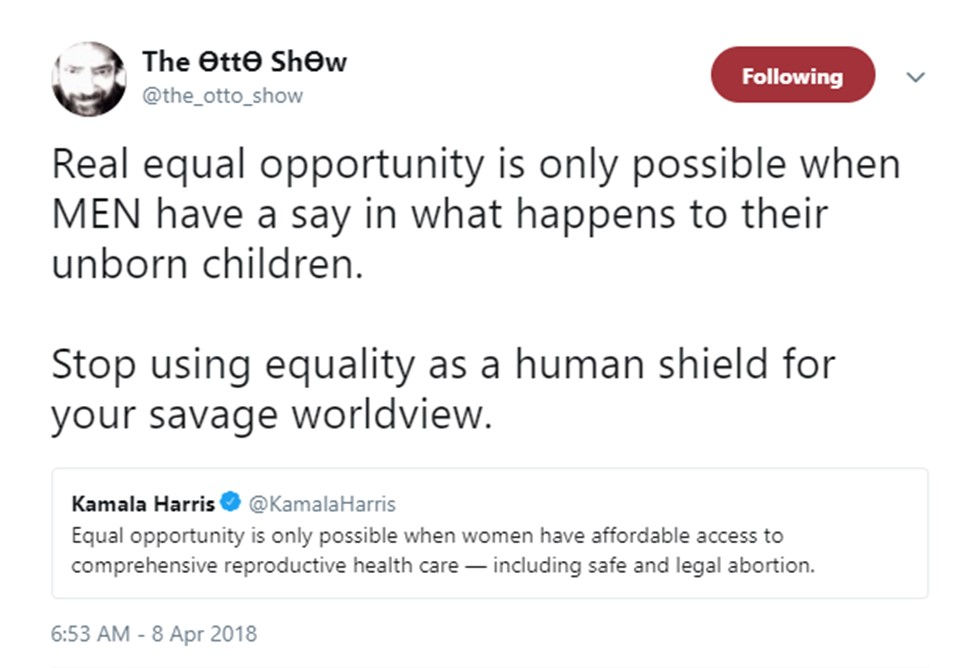
So, if abortion is a "human right", then the "human right" to life must always be considered as well. Since the child cannot speak, the man should also be involved in the process. Otherwise, is it really a right? Or a selfish choice?
Water is definitely one of those vital needs of life. Humans are meant to consume water on a daily basis. There is no other way around it. However, there is a difference between a need and labeling it as a "human right."
Even though I am not a Matt Damon fan (used to be), this commercial actually has water labeled correctly as a human need.
In the Social Media Age, privacy has clearly become a hot topic issue with the recent revelations about Facebook selling user data. It is such an issue that is now labeled a "human right." Part of me wants to say what Facebook did was wrong, but the individual had to provide the information to Facebook in the first place.
However, there are some clear instances where Facebook is mining through your posts (maybe even your computer) to find out more information about you such as political affiliation, religious beliefs, and other topics based on what you click on, pages you like, etc. This is how their advertising programs work. Every time I have run a Facebook ad for American Viewpoint, there are a number of demographics I can choose from to target my ad to the people that I want to visit this website.
Then for Facebook to sell that data, to willingly share it with a presidential candidate (Obama) is a violation of that trust - but it still does not make privacy a "human right."
When you post something on a public forum like Facebook, you accept the risk of your information becoming public. When you become a public figure like David Hogg and then post personal information about yourself, you open the door to criticism. You give up your expectation of privacy willingly.
"...have to expect criticism if they are entering the public arena." - Bill Maher (in support of Laura Ingraham)
However, when you did not make your personal information public, it is definitely a violation of your expectation to privacy. It is probably also a violation of your civil rights. But it is still not a "human right" which carries a degree of universality to it.
Now, let's get to the more "interesting" part of our list of "human rights."
It seems that the Internet is now a "human right" as well. Yes, your ability to peruse Facebook - so they can sell your data, watch those cat videos on YouTube, and to engage in the "meme culture" is now a basic "human right." You will get these "noble" sounding arguments about the need to allow individuals to advance their place in life and that the Internet is a vital necessity to achieving that goal.
The problem is that every time makes that argument they contradict themselves. They bounce between it being a "human right" and a "necessity" which would qualify it as a need - and not a right. You do not need the Internet to advance in life. Case in point -
To go right along with the Internet, cell phones are also now a "human right." So, instead of having to sit at home while you surf the net, you can now do it while you are walking around.
For me, my personal favorite is a homeless man panhandling for change while I walked to a meeting in a different building. After I passed him, I looked back over my shoulder to see him take out his cell phone and make a call. (You can go with the obvious reaction to seeing this play out in real life.)
Then, of course, who cannot forget this news clip (and later viral YouTube sensation) -
Wonder if Obama should be lauded for his "support" of cell phone "human rights' or arrested for election bribery? (We will let the historians decide that one.)
I think one of the more common ones - especially in this political climate - is the basic "human right" of a "living wage." The basic concept is that if you work full-time you should be able to support a family on a minimum wage job. So, these are the politicians (see liberal/progressive Democrats) who are consistently advocating raising the minimum wage to $15/hour.
This is laughable on its face. If you did a longitudinal study comparing the cost of living over an extended period of time - say from the implementation of a minimum wage till now - you will see a proportional increase in the costs of living EACH time the federal government raises the minimum wage.
The money you earn is through work - not a gift from the government - and handling the responsibility of continually earning that wage. If it is not enough, you have to make responsible decisions about what to do with the money you have - and seek out other opportunities to earn more money if you need to. (Hence the reason I am always looking for a better job that pays more.)
The problem is that you do not even have to work to earn more money. Remember "The Life of Julia" from the Obama 2012 campaign. They laid out in hard numbers that it would be better for "Julia" to not work - which makes the concept of a "living wage" moot since you can do better to not work in a lot of cases. (FYI - wage basically means payment for services rendered.) There was a Cato Institute study that showed in a number of Democratic states that you can do better by not working than working - with Hawaii providing the best standard of living for not earning a wage much less a "living wage." (The number of welfare programs - just at the federal level - is staggering.)
So, if you do not even have to work, then the "human right" of a "living wage" does not exist. Earning a wage - of any sort - is a responsibility that most reasonable adults willingly choose to take on as part of their lives.
Clearly, I could continue to work my way through the current list of "human rights." The Universal Declaration of Human Rights listed about 30. The end result here is to create a Utopian society that has achieved a perfectly egalitarian state amongst all of its people.
The problem is "equality" is perception. If you look back through just American history, you would see attempts to make all people "equal" in this society. Slavery is gone, we have the Civil Rights Act. We already have equal pay laws and so on.
As a country, we have done a great many things to make our society better, to make it equal. The reality is that most of these so-called "human rights" do not take into account human nature, choice, or the most important - responsibility.
The Founding Fathers were quite insightful to spell out our "inalienable" (human) rights to the only ones that can be provided to all - "Life, Liberty, and the Pursuit of Happiness."
The rest of it is up to the individual.



This pretends to discuss a difficult concept and fails. For example, a woman's right to liberty IS the right to end a pregnancy. Women have done this throughout the history of man - and without men being aware. When does a fetus acquire rights? No answer from me. But the writer should pick a smaller battlefield.
Good thought provoking article Chris. As far as a "womans" right to choose to have an abortion - where is the father and child's right to decide? The woman agreed to conceive a child when she willing had unprotected sex, therefore she willingly created another life that has rights, and she created that life with another human being who also has parental rights. If the woman was a victim of rape or incest, or her own life is at risk then the right to decide should belong to her - but the life of the child should hold equal consideration and adoption a viable option giving the child the chance to live.
good article but i could add that how far are we willing to trample upon another's right to provide that "human right" to another person--after all welfare benefits have to be paid by someone and that someone is the wage earner--do i not have a "right" to keep what i have worked for, are they trampling on my "right" if they confiscate some of it to give to another ?